There’s something about small-town paranormal romance that feels like coming home—even when that home is haunted.
Maybe it’s the way everyone knows everyone’s business (including the ghosts). Maybe it’s how gossip becomes legend, and how those legends then become the undeniable gospel of truth.
Or maybe it’s just that in a small town, eccentricities aren’t just tolerated—they’re expected and seen as normal.
I’ve written over 25 bestselling books set in small Australian outback towns, and I can tell you this: small towns have their own logic. They make room for the strange. They turn whispers into folklore. And they create the kind of intimacy where love—supernatural or otherwise—has nowhere to hide.
So when I switched genres from rural romance to paranormal gothic romance with Forget Forever, the setting didn’t change as much as you’d think. Because those fabulous small-town dynamics? They’re the same whether you’re dealing with the eccentric mango farmer, or that pet water buffalo that thinks it’s human, or the ghost who’s been haunting the manor for two centuries small-town setting are just the jam. (bad pun?)
So, forget the gingham tablecloth and drinking out of mason jars as we slide to the darkside of why small-town paranormal romance hits differently—and why it might just be your new favorite subgenre.
Small Towns Make Room for the Strange (As Long As It Stays in Its Lane)
In a city, the weird gets lost in the noise. You can be as eccentric as you want because no one’s paying attention. But in a small town? The weird gets a nickname and a reputation.
The town witch isn’t run out with pitchforks, she’s just “that family we don’t talk about” (but everyone goes to her for remedies when the doctor can’t help and for that tarot reading of their love life).
The haunted manor isn’t demolished, it’s a local landmark people avoid after sunset, unless teenagers looking for a place to hang. But everyone has a story about the place as they graffiti the walls, and it’s a popular landmark for giving directions to lost tourists.
Then there’s the reclusive landowner who’ll walk the edges of her property, talking to her cows, or the spirits there, while making fairy houses and leaving offerings at crossroads. They’re allowed to exist, as long as it’s doesn’t become everyone else’s problem. Like accidentally forgetting about that candle, that got knocked over by the local wildlife (probably a possum) into the dry grass, setting that fairy house alight, and the next 200 miles worth of bushfire. Wait, sorry wrong continent.
Or is it?
Rejection of the strange in small towns doesn’t exist.
Small towns don’t reject the supernatural—they absorb it. They create space for it so it can fuel for those angsty whispers, with animated hand movements, that makes the conversation flow between the coffee and cake crumbs in small town cafes. You know the ones. In fact, I’m betting you can picture that café right now. Huh?
Small towns strangeness becomes part of the furniture, where things like curses are just bad luck or that fued over boundary fencing.
In Practical Magic, the Owens sisters are town pariahs and town fixtures. Everyone knows they’re witches. Everyone talks about them. But they’re also part of the town’s gossip and its history.
In The Ex Hex, the whole town of Graves Glen knows Vivi’s family is witchy. It’s not a secret. It’s just… accepted. The town festival even revolves around it.
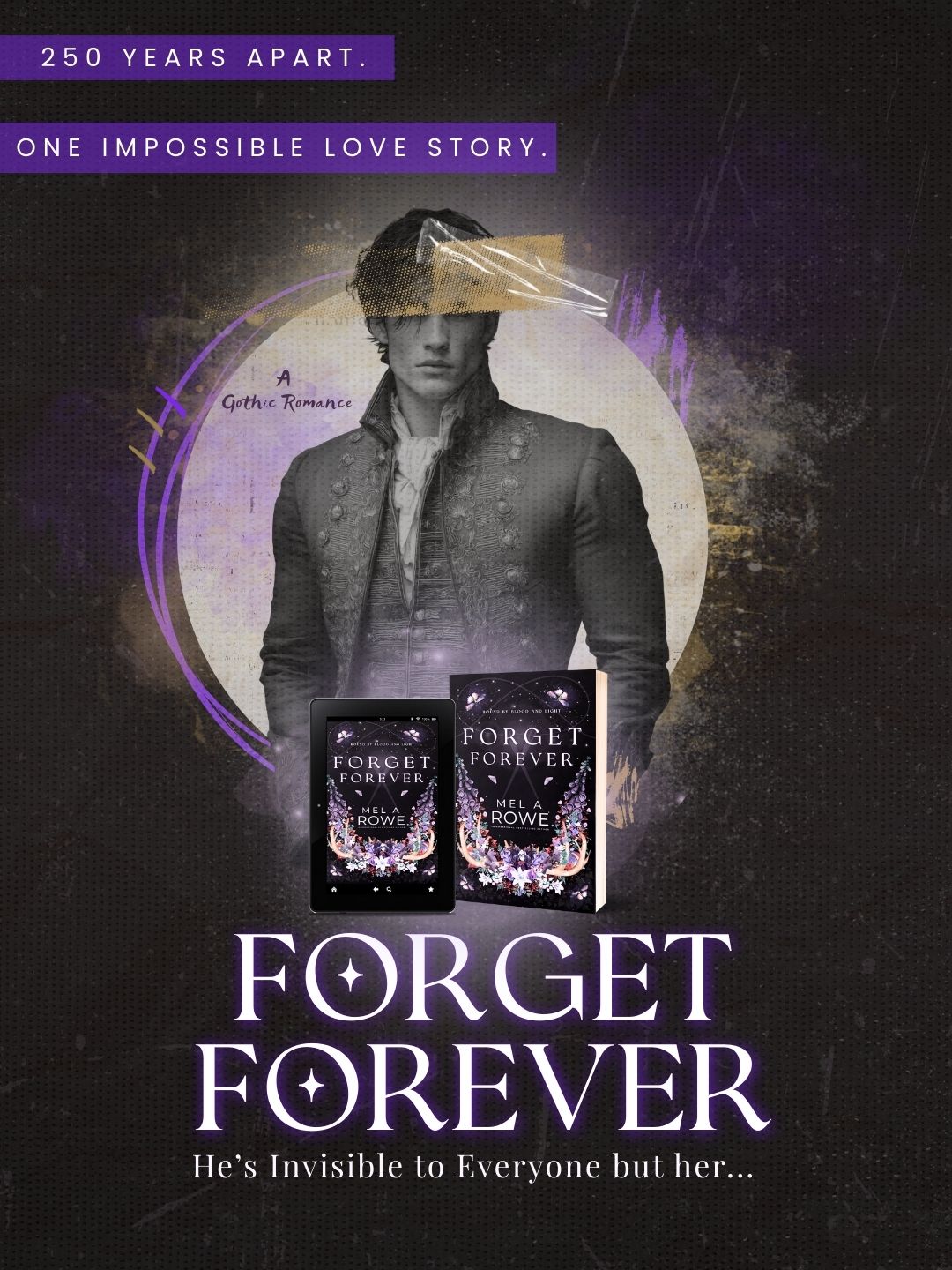
And in Forget Forever, Strathmuir Manor has been haunted for centuries. The whole town knows. They avoid it. They just don’t tell stories about the reclusive CEO who lives there. But no one’s tearing it down. It’s just there—part of the landscape, part of the lore.
That’s the beauty of small-town paranormal romance: the magic doesn’t have to hide it just becomes part of the landscape.
Gossip Becomes Legend Becomes Lore
Let’s talk about gossip.
In a city, gossip dissipates. It spreads thin across too many people, too many distractions. But in a small town? Gossip is currency. It’s how information spreads. It’s how reputations are built. And it’s how supernatural secrets become community truth.
Someone sees a light in the window of the old manor. By morning, half the town’s heard about it. By the end of the week, it’s “the manor’s been haunted for 200 years, everyone knows.”
Gossip becomes legend. Legend becomes lore. And lore becomes the story no one questions anymore. And is just part of that small town’s long list of superstitions.
This is how small towns mythologize the strange, which really is something magical in itself. And it’s so easily done…
A reclusive woman who keeps to herself becomes “the witch in the woods.“
That tragic death becomes “the curse that’s plagued the family for generations.”
Some strange occurrence becomes “something we don’t talk about, but everyone knows.”
By the time the heroine stumbles into the supernatural plot, the town’s already done half the worldbuilding for her. The curse? Already accepted fact. The ghost? Already part of the town’s collective memory. She’s not discovering something new—she’s walking into a story the town’s been telling itself for decades.
In Forget Forever, when Chantelle (the local librarian) is forced to attend a volunteers’ meeting at Strathmuir Manor, she’s not walking into the unknown. The whole town already knows the manor is haunted. They’ve been whispering about it for generations. And that’s the magic of small-town paranormal romance: the supernatural doesn’t need to be explained or justified. It’s already woven into the town’s DNA.
Community Is Both Safety Net and Pressure Cooker
Here’s the thing about small towns: everyone knows your business.
That can be comforting when you need help, are grieving, or trying to break a centuries-old curse and could use some community backup. But it can also be suffocating, especially when you’re trying to hide magic, keep a secret, or fall in love with a ghost without the whole town weighing in with their opinions.
Yes, we know that some sections of those small towns are very judgy. Suburban Karen’s have nothing on that group – who shall not be named. But everyone in town knows about them, and probably think the only reason they won the jam contest five years in a row was of small town connections. Nod is you know.
Is Small-Town Community a Curse for Paranormal Romance?
In small-town paranormal romance, community isn’t optional. It’s structural. Even if you’re living on a hundred acres, you still can’t escape it. You’re stuck with these people, the neighbours, that guy who’ll cut through your back paddock with his tractor, or that group of kids who’ll fish from your stream.
You might as well love them (even when they’re gossiping about you in the supermarket aisles), because that guy with the tractor may help pull out that tree stump, those kids will share their fish and fishing tips, and well, that woman with her jam, may share her secret recipe – if not, she’ll give you some nay jars of the stuff you’ll never touch store bought goods again.
When Small town locals meets the Supernatural
Small towns have certain known events and groups, such as the volunteers’ meeting for open day events. The town festival. The Christmas parade. The community theatre group where that annual play allows for horrible acting and you hate Shakespeare but you’ll still go anyway. There are the places like the cafe, the stockfeed store, hardware store and the local supermarket where everyone gathers. These aren’t just settings—they’re moments where the supernatural and the mundane collide. Where magic happens in public, but no one says it out loud. Yet, it’s where the witch and the ghost and that curse become everyone’s business, whether they want it to be or not.
In Practical Magic, the Owens sisters can’t escape their witchy reputation because the town won’t let them. Their magic is everyone’s business. And so one of them makes it a business selling handmade herbal products.
Because in a small town, you don’t just live your life—you live it in front of an audience that has opinions, who have friends with opinions, and so on and so on.
Small-town paranormal romance understands that community is complicated. It’s both invasive and protective, judgmental and loyal. But in some paranormal romance stories it is absolutely essential.
Why Small-Town Paranormal Romance Feels Like Home
So why does small-town paranormal romance hit different?
Because it’s intimate. It’s familiar. And it has that feeling that magic isn’t invading the town—it’s always been there, woven into the marvel of daily life.
It’s cozy-spooky: emotionally safe with a blend of found family, community care, and the comfort of knowing everyone’s name. Sure, it can be supernaturally risky with curses and ancient secrets that could destroy everything.
But it’s also relatable.
Most of us aren’t secret agents in Prague or fae royalty in another realm. But a small-town librarian stumbling into a haunted manor?
That could be us.
Small-town paranormal romance takes the extraordinary and plants it in the ordinary. It says, “Magic can happen anywhere,” even in the place you thought was too small, too quiet, too boring is the why and how it makes room for some magical wonder.
Small Town Thoughts on Supernatural
The small town may be small, but it’s big on stories. And in small-town paranormal romance it holds something other subgenres sometimes miss: magic that doesn’t have to be loud to be powerful.
It’s in the way a town absorbs the strange and makes it part of the story as the witnesses to a supernatural romance that has nowhere to hide.
So if you’re craving romance that feels like coming home (even if that home is a little haunted), small-town paranormal romance might just be your next book obsession.
And if you’re ready to step into Strathmuir Manor—where a smalltown librarian clashes with a haunted Lord, you bet the whole town is watching—try Forget Forever HERE>>