Paranormal Romance vs Gothic Fantasy Romance: What’s the Difference?
If you’ve ever stared at a Goodreads shelf trying to figure out whether a book belongs in “paranormal romance” or “gothic fantasy romance”—you’re not alone. I mix these up constantly! And honestly? That’s because these aren’t neat little separate boxes. They’re layers that blend together in ways that make readers (and authors!) want to throw their hands up in confusion.
Let me try to untangle this for both of us.
The Simple Answer (Before We Complicate It)
Paranormal Romance = supernatural creatures in the modern/real world
Gothic Fantasy Romance = fantasy/secondary world with a dark, mysterious atmosphere
But here’s the catch: Gothic is also a vibe you can layer onto anything.
And that’s where it gets messy. In a good way. In a “wait, what shelf does this book actually belong on?” way.
Let’s Use Werewolves to Make This Clearer
Let’s imagine a family of werewolves and put them in different stories:
For scenario 1: we’ll have Werewolves living next door in modern-day Chicago → Paranormal Romance
- Modern world
- Supernatural creatures
- Could be fun and light, or dark and intense
What about scenario 2: Werewolves in another world, in a dark castle, hunting secrets → Gothic Fantasy Romance
- Secondary/fantasy world (not Earth)
- Dark, mysterious atmosphere
- Secrets, shadows, something lurking
Then we have scenario 3: Werewolves in a manor in the modern world, hunting in the dark, unraveling a family secret hidden within the house → Gothic Paranormal Romance (BOTH!)
- Modern world (paranormal)
- Werewolves (paranormal)
- Manor, darkness, secrets, that shadowy atmosphere (gothic)
See? Gothic is a layer. You can add it to paranormal and fantasy genres. You can add it to historical romance with zero supernatural elements to really give it a twist.
What Is Paranormal Romance?
Paranormal romance is about supernatural creatures living in our modern world.
The Key Elements:
- Setting: Contemporary Earth (cities, small towns, suburbs—but in the NOW, not historical)
- Supernatural Beings: Vampires, werewolves, shifters, fae, witches, demons, angels
- The Hook: “What if these supernatural beings existed right now, hidden among us?”
The Vibe Can Vary:
- Light and fun: Snarky werewolves running coffee shops, vampire speed dating
- Dark and intense: Vampire politics, territorial pack wars, forbidden magic
- Gothic-flavored: Ancient vampire societies in shadowy mansions with centuries of secrets (looking at you, JR Ward!)
Examples:
- JR Ward’s Black Dagger Brotherhood – Vampires in the modern world, BUT they live in a mansion with tunnels, have ancient histories, darkness, and secrecy (this is ALSO gothic!)
- Charlaine Harris’s Sookie Stackhouse series – Vampires in small-town Louisiana, lighter tone but has gothic moments.
- Ilona Andrews’s Kate Daniels series – Post-apocalyptic Atlanta with magic and shifters
- Kresley Cole’s Immortals After Dark – Werewolves, vampires, and Valkyries in contemporary settings
The key: It happens in the modern world, but supernatural creatures exist.
What IS Gothic Fantasy Romance?
Gothic fantasy romance is about a fantasy world wrapped in dark, mysterious atmosphere.
The Key Elements:
- Setting: A secondary world (not modern Earth) OR a historical setting that feels removed from our time
- Atmosphere: Dark, moody, mysterious—Victorian manors, misty mornings, shadows that hold secrets
- The Vibe: Something is lurking around the corner. Deep libraries, dark wood, history that hides mysteries
- NOT necessarily horror: It’s atmospheric tension, not jump scares
What “Gothic” Actually Means:
Gothic is a vibe—it’s about:
- Dark, mysterious, shadowy settings
- Secrets buried in history
- A sense that something is watching from the corners
- Atmosphere that makes you feel the weight of the past
- Not necessarily about literal decay or crumbling buildings, but about history holding secrets
Examples:
- Mexican Gothic (Silvia Moreno-Garcia) – Historical setting, creepy mansion, family secrets, dark atmosphere
- Emily Wilde’s Encyclopaedia of Faeries (Heather Fawcett) – Academic gothic with fae in a cold, mysterious setting
- The Invisible Life of Addie LaRue (V.E. Schwab) – Dark bargain, time-spanning, atmospheric (also crosses genres!)
The key: It happens in a fantasy world (or feels removed from modern times) AND has that dark, mysterious, shadowy gothic atmosphere.
The Beautiful Confusing Overlap: Gothic Paranormal Romance
Here’s where it gets FUN (and messy):
You can have paranormal (modern world + creatures) that is ALSO gothic (dark atmosphere, secrets, shadows).
JR Ward’s Black Dagger Brotherhood is the perfect example:
- Paranormal? YES – Vampires in the modern world
- Gothic? ALSO YES – They live in a mansion full of tunnels, have ancient vampire history, exist in darkness and secrecy, surrounded by shadows and mystery
It’s not “paranormal OR gothic.” It’s layered.
Other Books That Layer These:
- A Court of Thorns and Roses – Starts with gothic vibes (cursed beast, dark bargain, mysterious estate), then shifts to high fantasy with fae politics
- From Blood and Ash – Gothic aesthetics (castles, secrets, dark atmosphere) in a fantasy world with paranormal-style creatures and romance
Gothic isn’t a separate genre—it’s a mood, an aesthetic, an atmosphere you add to the story.
So What’s the ACTUAL Difference?
Let’s break it down:
Paranormal Romance:
- Modern/contemporary world
- Supernatural creatures (vampires, werewolves, fae, etc.)
- Witches, mages, sorcerers (magic users)
- Can be light OR dark
- Can have gothic vibes OR not
Gothic Fantasy Romance:
- Fantasy/secondary world (or historical removed from modern times)
- Dark, mysterious, shadowy atmosphere
- Secrets, history, something lurking
- Can have paranormal creatures OR just atmospheric magic/curses
Gothic Paranormal Romance:
- Modern world + creatures + THAT VIBE (dark, mysterious, secrets, shadows)
Why This Matters (looking at those Goodreads Shelves)
If you’re tagging a book you’ve just read:
- Paranormal Romance signals: modern world, creatures, supernatural societies
- Gothic Romance signals: dark atmosphere, mystery, shadows, secrets
- Gothic Fantasy Romance signals: fantasy world + gothic vibes
- Gothic Paranormal Romance signals: modern world + creatures + gothic atmosphere
And if you’re searching on Amazon, brace yourself: their “gothic romance” category has been taken over by dark contemporary romance (alphas, mafia, morally gray MMCs—no actual gothic atmosphere). Real gothic romance often hides in “historical fantasy” or “dark romance” tags. So the genre chaos is REAL, my friend.
In Conclusion: It’s All About the Layers (Not the Boxes)
Here’s what I think it is (and how I keep re-learning every time I try to shelf a book):
- Paranormal Romance = modern world + supernatural creatures/ magic
- Gothic Fantasy Romance = fantasy world + dark mysterious atmosphere
- Gothic = a vibe you can add to anything (modern, fantasy, historical, paranormal, whatever)
They’re not mutually exclusive. They blend and weave into unique layers that make great books. And those books are the ones where you stop caring about the labels because you’re too busy being utterly consumed by the story.
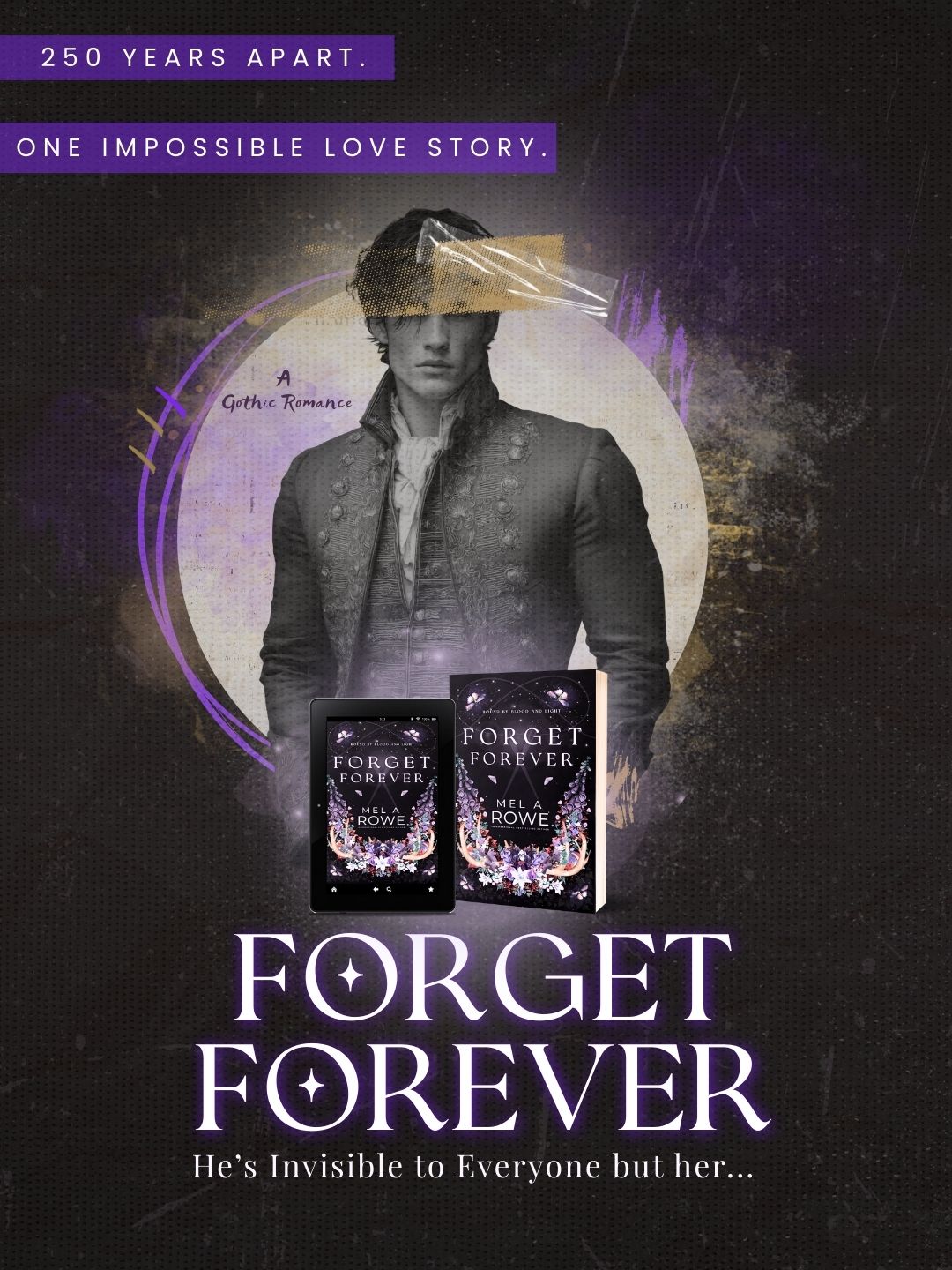
So where does Forget Forever sit?
It’s a modern world romance with a ghost, a curse, a haunted manor you’ll fall in love with, that somehow creates an entirely unique magical world, with a romance filled with longing and absolute gothic vibes?
Me… I’d say it’s whatever you choose it to be.
And that’s the beautiful truth about genre: the best stories don’t fit neatly into boxes. They layer paranormal elements with gothic atmosphere, blend modern settings with magical worlds, and make you forget you ever cared about categorizing them in the first place.
So the next time you’re staring at a book wondering “Is this paranormal or gothic or fantasy or what??”—the answer might just be “It’s all of it. And it’s going to be amazing.”