As part of our Gothic Romance Series, what defines a Gothic hero? From brooding protectors to tragic anti-heroes, let’s explore the gothic romance archetypes readers know and love.
So, what makes a Gothic Hero (and why do we love him)
I like to think that the gothic hero isn’t loud, shiny, or fearless.
He’s shaped by shadows, history, place, and the burdens of what came before him. He’s often mistaken for a villain, sometimes confused with a dark romance anti-hero, and almost always misunderstood.
But when you know what to look for, the gothic hero becomes instantly recognisable — and deeply irresistible.
What Is a Gothic Hero?
A gothic hero is defined less by power and more by restraint.
Common traits include:
- emotional depth and inner conflict (think emotionally burdened)
- a strong sense of responsibility or guilt
- is protective rather than dominating
- deep connection to place, legacy, or history
- doesn’t chase danger, he tries to contain it
Most of all, he must be emotionally capable of love.
As well as:
- Have a healthy respect for consent and boundaries
- May be shaped by darkness, but not defined by it
- Eventually allows love to redeem or soften him, while not using it as an excuse for cruelty.
Classic Gothic Heroes Readers Already Know
Even if readers don’t label them as gothic, these characters helped shape the archetype:
- Mr. Rochester (Jane Eyre) — brooding, secretive, capable of growth
- Maxim de Winter (Rebecca) — haunted by his past and his house
- The Beast (Beauty and the Beast) — monstrous in appearance, restrained in love
In each case, the house, estate, manor, or the setting acts as an extension of the hero’s inner world.
A quick note: This post focuses on male gothic heroes in romance; gothic heroines (think Jane Eyre herself, or Mina Harker) follow similar patterns of restraint, emotional depth, and moral grounding.
The Real Question Readers Are Asking
Here’s the thing: readers may not be asking, “Is this technically gothic?”
They’re asking: “Is this man emotionally safe to love?”
That’s the sorting mechanism. And all I’m doing here is giving gothic romance readers the language for a feeling they already have. Because, hey, I struggled to make a clear differentiation too.
Brooding + tragic + hot ≠ a gothic romance hero.
So let’s break down the categories…
Gothic Hero vs Gothic Anti-Hero vs Gothic Villain
The Gothic Villain
The original Count Dracula (Bram Stoker, 1897) is not a romance hero.
He is:
- predatory
- controlling
- invasive
- a symbol of corruption and fear
There is no mutual romance, no consent, no emotional safety. He is a gothic villain, not a hero or anti-hero.
This is the important distinction for readers, especially when navigating dark gothic romance, and a great place to start. Which brings us to…
The Gothic Anti-Hero
Some famous gothic figures blur the line like:
- Heathcliff (Wuthering Heights) — obsessive, destructive, tragic
- The Phantom (Phantom of the Opera) — dangerous, isolated, yearning
- Edward Cullen (Twilight) — controlled danger, gothic-lite restraint
These characters reveal why gothic romance often gets mistaken for dark romance. But what makes it different is intent and how emotional safety matters.
Modern Dracula interpretations have romanticized him:
- Francis Ford Coppola’s Dracula — tragic, love-driven, still dangerous
- Castlevania — grieving husband, sympathetic monster
- Romance novels inspired by Dracula — often softened into gothic anti-heroes
In these versions:
- consent is added
- violence is contextualized
- love is mutual
That makes Dracula a gothic anti-hero at best, but never a clean gothic hero.
Let’s Muddy the Waters Even More
Here are some of my favorites that made even me wonder about the hero vs. anti-hero line for those gothic characters:
🦇 Van Helsing (2004) This Dracula is:
- Capable of love
- Suffers loss
- Emotionally motivated
- Dangerous but not empty
But he’s still classed as a gothic anti-hero, not a villain. Even though he does monstrous things, there is longing, regret, and emotional depth to this character. That’s the anti-hero line.
🖤 Dean Winchester (Supernatural)
Dean is textbook gothic anti-hero:
- Haunted by past trauma
- Carries generational burden
- Willing to sacrifice himself to save others
- Protects fiercely — especially family
- Believes he is undeserving of love
That is pure gothic coding. Dean becomes a gothic romance anti-hero when a story allows him emotional intimacy, redemption, and rest (which usually includes beer or pie) for this character.
🌫️ Sam Winchester
Sam is closer to a gothic hero because he’s:
- Conscience-driven
- Introspective
- Resists darkness (except that time he got hooked on demon blood)
- Wants a normal life
- Often tied to prophecy and fate
He’s the moral counterweight to Dean’s anti-hero arc.
Together, they form a classic gothic duality of corruption vs. conscience, damnation vs. hope.
So, are Sam and Dean Winchester gothic romance heroes?
Are they gothic? Yes — absolutely.
Are they romance heroes? No. Shocker, right!
Instead, they are classed as tragic protectors shaped by generational trauma, bound to duty, while being emotionally repressed, and constantly sacrificing themselves. That is classic gothic hero coding.
But:
- Romance is never truly part of the story
- All love interests are secondary and often doomed
- The brotherhood is the core of their relationship
These brothers are gothic protagonists, not gothic romance heroes. Yet, it still doesn’t stop me wanting to watch the Supernatural series for the 10th time.
And yet we have…
🦇 Johnny Depp’s Barnabas Collins (Dark Shadows)
He’s another vampire, I have in my private home movie collection. Wait, hear me out…
Barnabas Collins = Gothic Hero (Tim Burton style, of course)
So how does this vampire qualify as a Gothic Hero? It’s because he’s:
- Capable of love
- Deeply loyal
- Is haunted by the past
- Bound to the family manor and legacy
- Dangerous, but self-aware
- Desire is protective, not exploitative
Yes, he’s flawed. Yes, he’s vampiric. But he is emotionally safe within the story’s moral frame.
And that makes him a gothic hero, not an anti-hero. Which is the kind of character gothic-lite readers respond to.
What About Frankenstein?
This one trips everyone up. Me too, before I started asking the questions for this post.
Victor Frankenstein is:
- selfish
- reckless
- emotionally negligent
- incapable of love or responsibility
He creates life — then abandons it. He is a gothic cautionary figure, not a hero.
The Creature is the tragic gothic figure (not a romance hero). He is:
- intelligent
- emotionally sensitive
- desperate for connection
- rejected by society
He could be read as a tragic gothic soul, a symbol of loneliness, and a figure some modern romance stories have reclaimed into a gothic hero.
But in the original novel:
- the poor thing is not given love
- he does not experience romance
- and his story is about exclusion, not intimacy
Modern romance retellings sometimes turn a Creature-inspired figure into a gothic hero — but that is an adaptation of the classics.
Here’s the Clean Breakdown for Gothic good guys and Gothic bad guys
Gothic Villain
- Classic Dracula
- Uses desire as domination
Gothic Anti-Hero
- Van Helsing’s Dracula
- Dean Winchester
- Phantom of the Opera
- Heathcliff
Capable of love while also being dangerous — redemption is uncertain.
Gothic Hero
- Barnabas Collins (Dark Shadows)
- Mr. Rochester
- Lord Lucien in Forget Forever
Emotionally burdened, protective, capable of love, and ultimately safe — well, to those they love that is.
Side by Side: Gothic Hero vs Gothic Anti-Hero
Moral restraint vs. moral compromise. Redemption vs. reckoning
A gothic hero:
- is morally grounded
- struggles, but does not exploit
- fears becoming the darkness that surrounds him
A gothic anti-hero:
- is morally compromised
- may have caused real harm
- carries shame rather than entitlement
Why We’re Drawn to Gothic Heroes
Readers are drawn to gothic heroes because:
- Of the yearning
- Safety through restraint
- Emotional depth over dominance — they value emotional intensity over cruelty
- They protect rather than conquer
- Transformation without domination
The gothic hero doesn’t need to be redeemed from evil; he just needs to be understood.
Quick way to work out: Is He a Gothic Hero?
Ask yourself in your next romance book labelled as gothic romance:
- Does he respect her boundaries and consent?
- Is he protective without being possessive?
- Does darkness shape him or define him?
- Would love redeem him or excuse his cruelty?
- Is he emotionally capable of reciprocal love?
If yes to all = Gothic Hero.
Mixed results = Gothic Anti-Hero.
If no = Gothic Villain (and it’s not a romance story at all). But that doesn’t include those villains that then become heroes, because of love. *sighs
Gothic Heroes in Gothic-Lite Romance
Gothic-lite is the middle ground between the darkness of Gothic Romance stories, as these Gothic heroes are:
- Sensual without cruelty
- Dark atmosphere, not dark behaviour
- Love as protection, not possession
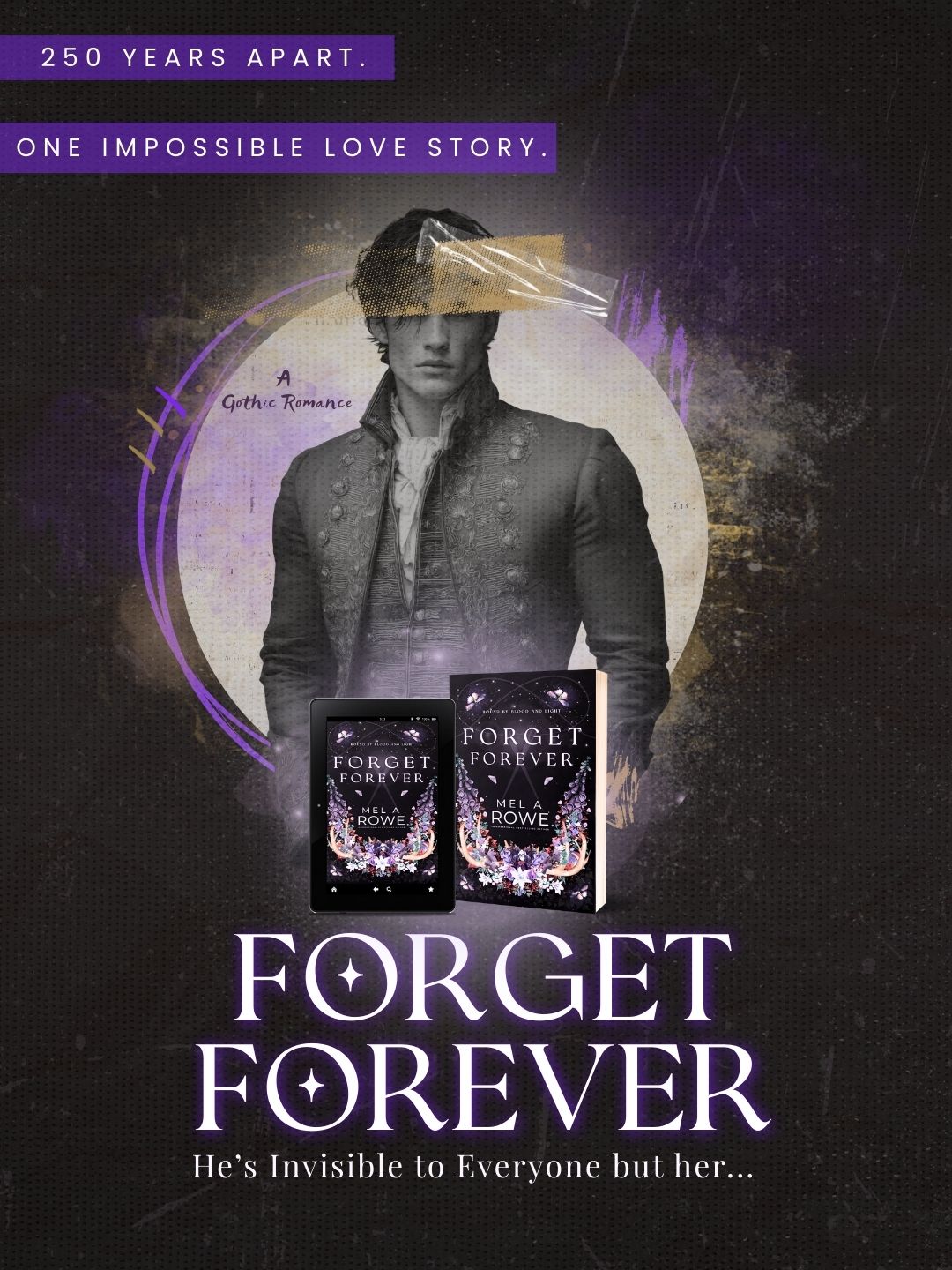
Modern gothic-lite heroes are still emerging in romance, which is why readers often find themselves drawn back to classics like Rochester or adaptations like Dark Shadows. If you’ve been searching for contemporary gothic heroes and keep coming up empty, you’re not alone — and that’s exactly why Forget Forever exists.
A Familiar Example of the Gothic Hero’s World
Many classic gothic stories, even light-hearted ones like Scooby-Doo and most episodes of Supernatural, rely on:
- haunted houses
- hidden passages
- inherited secrets
- fear driven by deception, not monsters
This is why gothic romance often feels nostalgic and safe, even when it’s eerie. The darkness is usually revealed, not indulged.
And that’s why so many romance readers go back time and time again for these complex characters and the magical atmospheric romance that make the gothic heroes in our stories. Do you agree?
Psst — if you’re looking for a gothic-lite hero, check out Forget Forever. It ticks all the boxes you’ve read above.