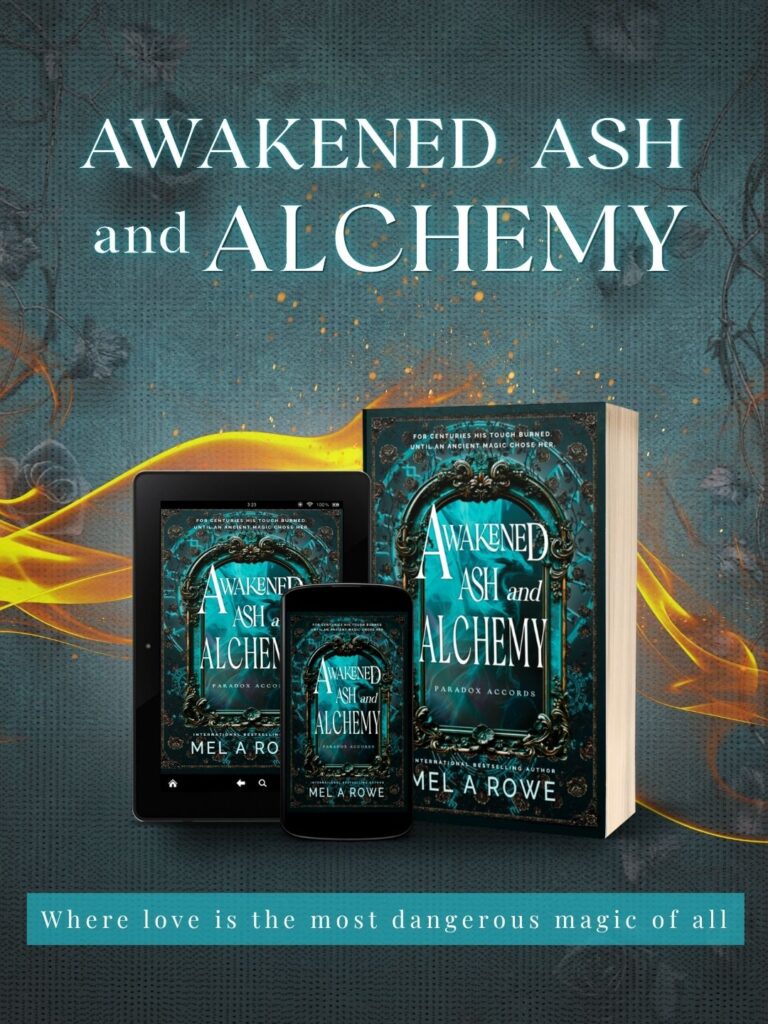
The gothic fantasy romance Awakened Ash and Alchemy flips the fated mates trope, so I wanted to explore the good bad and ugly parts to: What Is the Fated Mates Trope — And Why Readers Love to Hate It.
What Is the Fated Mates Trope?
The fated mates trope is a fantasy romance convention where two characters are magically or prophetically bound to each other before either of them has a real say in the matter. Think instant soulmate, where you get to skip the dating pool.
Basically, fated mates means the universe — or a bond, a mark, a scent, a prophecy, or a curse, flavored by some hint of magic your story world prefers — has already decided who belongs with whom. The characters don’t choose each other; instead they get handed a cosmic memo.
Does that make them compatible? Or is it just biological? I mean, he likes her, she likes him, and it’s chemistry. Or is it more…
Common ingredients of the fated mates trope:
- There’s that first recognition moment — eyes meet, something shifts inside
- A physical moment — desire grows, protectiveness in some, and possessiveness in others
- Resistance — you have to at least have one character who spends several chapters insisting this is a terrible idea, so conflict is paramount.
- The no opt-out clause — the bond exists whether anyone consented to it or not
That last point is where the trope gets interesting, and where readers start arguing in the comments. Especially when we live in a society where choice and consent matter, and then this cosmic-cupid comes along and takes his shot at the unsuspecting couple!
“… then this cosmic-cupid comes along and takes his shot at the unsuspecting couple!”
Why Readers Love the Fated Mates Trope
Fated mates works because it removes the guesswork. There are no will-they-won’t-they tussles on the pages. It skips the whole “does he even like me” phase, the conversations with girlfriends, the doodling of his name in your notebook when you’re meant to be taking notes during that staff meeting. The Fated Mates bond pretty much guarantees the outcome, which then lets the story focus on everything more interesting than the whole first-date dramas and other dating anxieties.
Readers love it because:
- It skips the slow-burn small talk and gets straight to the tension, and can trip into that Insta-lust phase
- It raises the stakes because you can’t just ghost your fated mate
- It creates this delicious built-in conflict between what the fates have decided and free will
- It’s satisfying to know they end up together, so the fun is watching them fight against it.
Why Readers Love to Hate It
Here’s the catch: fated mates can also feel like a shortcut. If the bond decides everything, where’s the actual romance?
Critics of the trope argue it kinda kills consent—and it does, by skipping the slow work of building real attraction that can make a good romance great.
Done badly, fated mates is lazy plotting with a magic bow on top.
If done well, it’s a pressure cooker between two people forced to tango with a bond neither of them wants to dance to. And that, my friend, is where the real romance lives.
How Paradox Accords Twists the Fated Mates Trope
Paradox Accords is a gothic fantasy romance duology that doesn’t play fated mates straight.
I flipped it and made the Fated Mates Trope the Villain.
“I flipped it and made the Fated Mates Trope the Villain.”
Captain Zarek and Angela aren’t handed a gentle, blushing bond. Not when they’re handed a version of the fated mates trope with the safety rails removed that takes them straight into a near nuclear catastrophe.
It doesn’t ask permission or wait for that slow-burn courtship. It just happens, and sets off a boatload of consequences
Normally, a traditional fated mates bond is often framed as a gift, and there’s this tussle before they get together. In Awakened Ash and Alchemy, the fated mates are trapped by an ancient magic that is closer to a weapon than an attraction.
Fated Mates vs. Anti-Fated Mates: What’s the Difference?
| Fated Mates (classic) | Anti-Fated Mates (Paradox Accords) | |
| Consent | Usually mutual, if reluctant | Not asked |
| Framing | A gift from fate, or family legacy | A weapon, not a gift |
| Pace | Recognition, then resistance | Immediate, no warning and no foretold prophecy |
| Tone | Swoony inevitability | Dark-edged, morally gray, with real stakes |
FAQ: Fated Mates Trope
What is the fated mates trope in romance books?
It’s a plot device where two characters are magically or prophetically bound to each other, often before they choose each other themselves.
Is fated mates the same as soulmates?
Similar idea, different mechanics. Soulmates is usually a broader, gentler concept. Fated mates typically comes with a specific magical bond, mark, or system tied to the story world’s rules.
Is the fated mates trope in Paradox Accords?
Yes and No. Because it comes with a twist! Paradox Accords flips the classic fated-mates comfort into something darker and non-consensual. It takes away the choice by taking control of something internally first and makes it the Villain! (And you’ll have to read the book to find out how).
Why do readers both love and criticize the fated mates trope?
It guarantees the outcome and raises the stakes, but critics argue it can undercut the characters’ journey, their consent, and overall story as the ending is known, if not handled carefully.
Read the Bond That Flipped the Fated Mates Trope
Want to see the fated mates trope taken somewhere it’s never been? Well, then get comfy and book your date by downloading: Awakened Ash and Alchemy — Book 1 of Paradox Accords.
Awakened Ash and Alchemy is a richly atmospheric gothic fantasy romance that flips the fated mates trope and makes it the enemy, fuelling a forbidden love powerful enough to ruin the hidden realm of Paradox. Find your copy here>>